

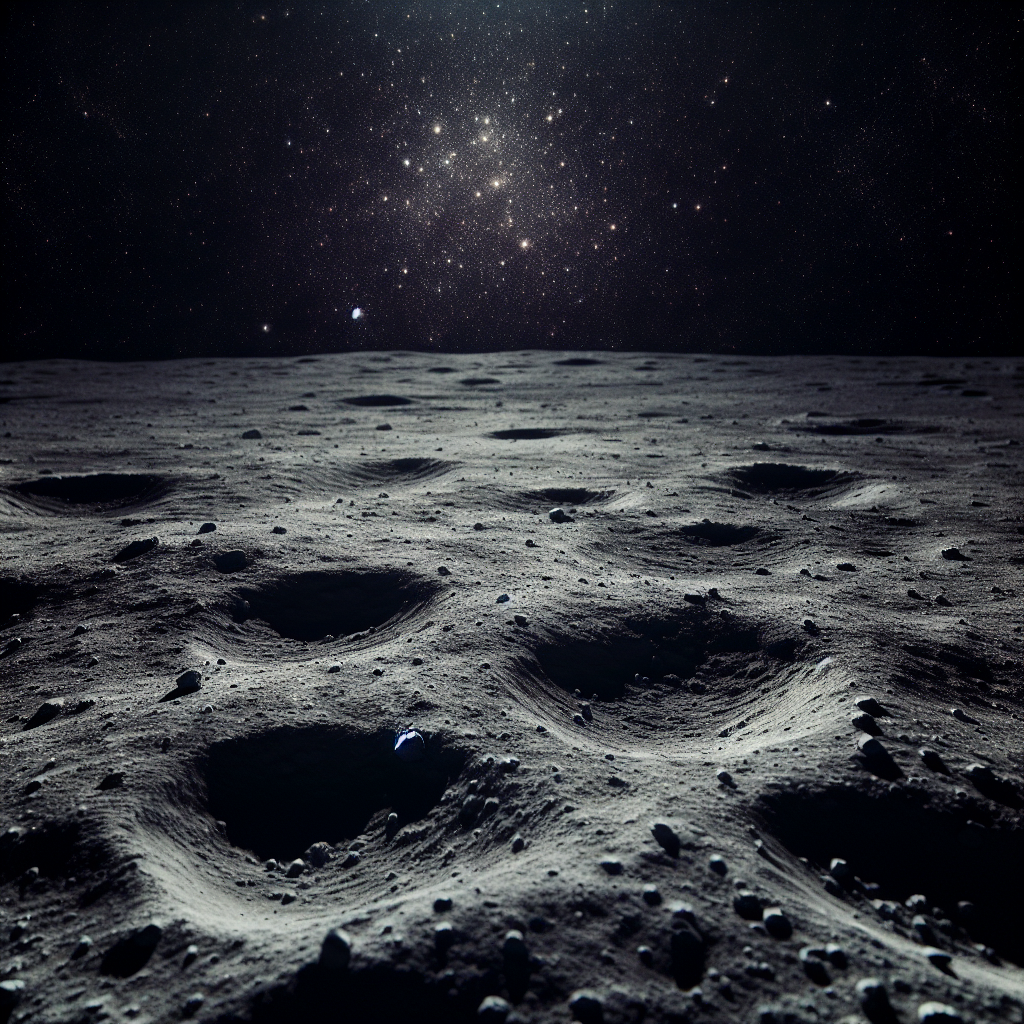
NASA recently announced the winners of its inaugural Human Lander Challenge, which brought together 12 university teams to showcase their innovative concepts for managing lunar dust. As NASA’s Artemis program aims to send astronauts, including the first woman and person of color, to the Moon by 2024, addressing the issue of dust mitigation during landing is crucial for establishing long-term human presence on the Moon.
The 12 finalists presented their proposed solutions at the HuLC Forum held in Huntsville, Alabama. The University of Michigan team emerged as the overall winner with their project titled “ARC-LIGHT: Algorithm for Robust Characterization of Lunar Surface Imaging for Ground Hazards and Trajectory.” The team received a ,000 award for their achievement. The University of Illinois, Urbana-Champaign and the University of Colorado Boulder secured second and third place, respectively, with their projects focusing on erosion reduction and risk analysis related to lunar dust dynamics.
The challenge of managing and reducing the threat of lunar dust is one that NASA takes seriously, as the agency aims to build a long-term presence on the Moon. Don Krupp, associate program manager for the Human Landing Systems Program at NASA’s Marshall Space Flight Center, emphasized the importance of partnerships with the academic community and industry to find innovative solutions for returning to the Moon.
In addition to the overall winners, two teams received the excellence in systems engineering award: Texas A&M University for their project “Synthetic Orbital Landing Area for Crater Elimination (SOLACE)” and Embry-Riddle Aeronautical University, Prescott, for their project “Plume Additive for Reducing Surface Ejecta and Cratering (PARSEC).” These awards recognize the caliber of solutions presented by the teams and highlight the promising future of aerospace leadership.
The Human Lander Challenge not only provides a platform for universities to showcase their ideas but also offers opportunities for students and faculty advisors to network and interact with subject matter experts from NASA and the industry. This interaction provides unique insights into careers and operations related to NASA’s Human Landing System capabilities, furthering the agency’s mission of human space exploration.
In terms of future trends, the Human Lander Challenge highlights the increasing importance of collaboration between NASA, academia, and the commercial industry. As space exploration becomes more complex and challenging, it is essential to leverage the expertise and innovation of various stakeholders to overcome obstacles and achieve ambitious goals. The challenge also underscores the significance of dust mitigation as a critical factor in lunar landings and exploration. This recognition by NASA can potentially lead to further research and development in this area.
Looking ahead, it is predicted that the aerospace industry will continue to prioritize the development of technologies and systems that enable safe and sustainable human presence on the Moon and beyond. This may involve advancements in robotics, materials science, propulsion systems, and communication technology. Additionally, partnerships between NASA, universities, and industry stakeholders are expected to grow, leading to increased collaboration and knowledge sharing in order to tackle the complex challenges of space exploration.
Recommendations for the industry include fostering strong collaboration between academia and industry to leverage expertise and resources. Encouraging more universities and research institutions to participate in challenges like the Human Lander Challenge can facilitate the exchange of innovative ideas and solutions. Moreover, continued investment in research and development is crucial to advance technologies and capabilities needed for sustainable human presence on celestial bodies.
In conclusion, the inaugural Human Lander Challenge held by NASA has showcased the innovative ideas and solutions of university teams in addressing the challenge of lunar dust management. With the Artemis program aiming to return humans to the Moon by 2024, this challenge highlights the need for effective dust mitigation during lunar landings. Collaboration between NASA, academia, and industry stakeholders is pivotal in overcoming the challenges of space exploration, and the Human Lander Challenge serves as a platform for fostering such collaboration. With continued investment and advancements in technology, the aerospace industry is poised to make significant progress in establishing a sustainable human presence on the Moon and extending our reach into the cosmos.
References:
1. NASA Announces Winners of Inaugural Human Lander Challenge: https://www.nasa.gov/press-release/nasa-announces-winners-of-inaugural-human-lander-challenge
2. NASA’s Exploration Systems Development Mission Directorate: https://www.nasa.gov/exploration-systems-development-mission-directorate/