A Glimpse into the Future: Trends in Lunar Exploration
The potential future trends related to lunar exploration are a topic of great interest for both the scientific community and space enthusiasts. As NASA astronauts continue to prepare for future missions, such as those at the Moon’s south pole, the world eagerly awaits the developments and advancements that lie ahead. In this article, we will explore the key points of the recent simulated lunar exploration in Arizona and analyze the potential trends, along with unique predictions and recommendations for the industry.
Simulated Lunar Exploration: A Training Ground for Astronauts
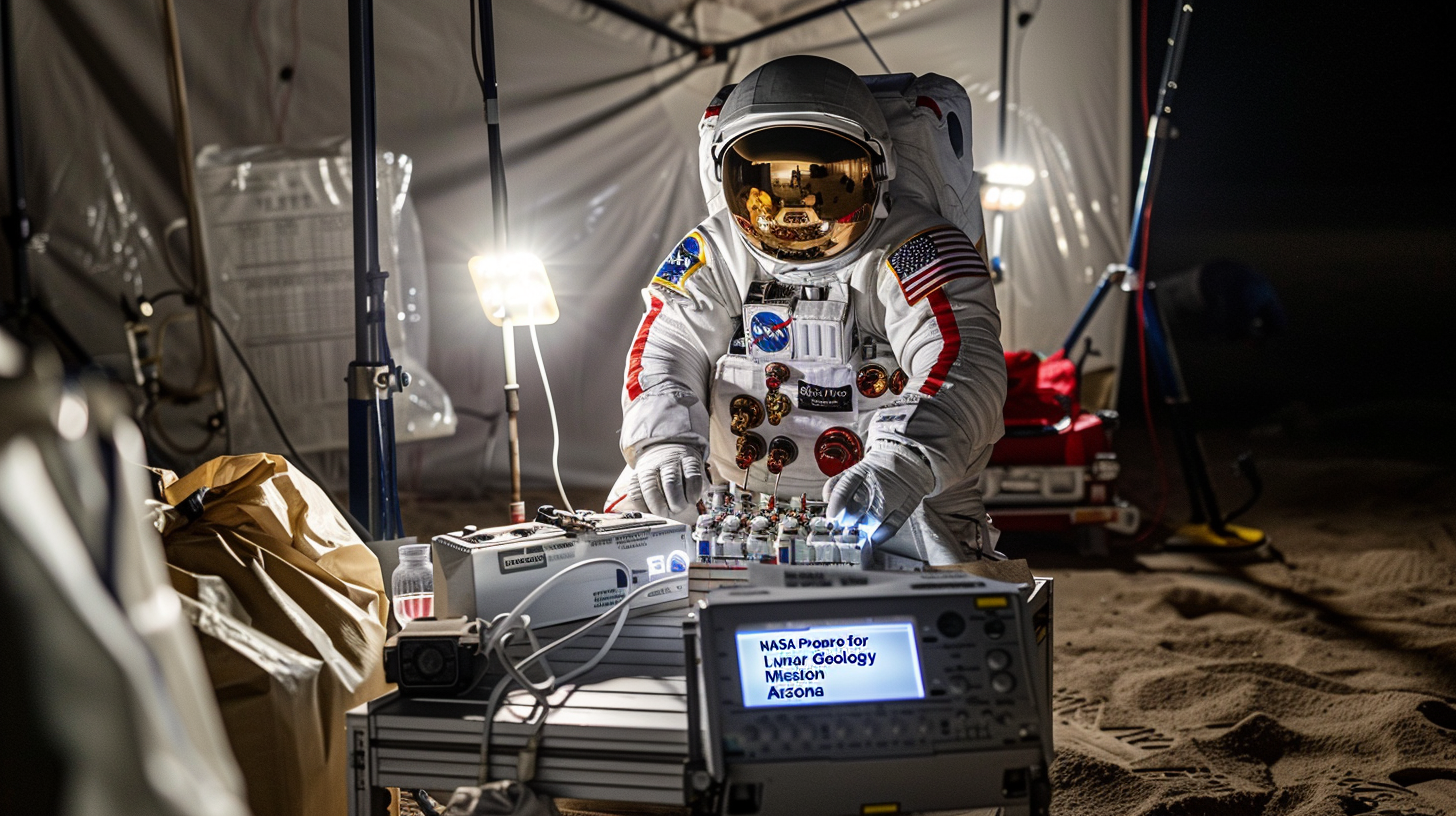
The recent simulated lunar exploration conducted by NASA astronauts in Arizona serves as a vital training ground for future Moon missions. The objective is to prepare astronauts for the challenges they will encounter while undertaking geology-related tasks at the Moon’s south pole. This simulated training allows astronauts to familiarize themselves with the lunar environment and gain crucial hands-on experience before embarking on actual lunar missions.
Notably, this simulated exploration also highlights the importance of geological studies and research on the Moon. Geology plays a significant role in understanding the Moon’s history, formation, and potential resources. With simulated training enabling astronauts to become adept in geological investigations, the future of lunar exploration holds immense promise for scientific discoveries.
Trends in Lunar Exploration: Looking Ahead
1. Increased Focus on Lunar Geology:
As astronauts undergo simulated training and gain proficiency in lunar geology, there will be an increased focus on geological studies during actual Moon missions. The Moon’s south pole, in particular, is of great interest due to its unique geological features, potential water ice deposits, and the possibilities of discovering new resources. The integration of geological investigations into lunar exploration missions will pave the way for groundbreaking discoveries and enhance our understanding of the Moon’s evolution.
2. Advancements in Robotic Lunar Exploration:
Robotic missions to the Moon have been instrumental in gathering valuable data and paving the way for human exploration. In the future, we can expect significant advancements in robotic lunar exploration technology. These advancements will enhance the capabilities of robotic rovers and landers, allowing them to carry out complex tasks independently and efficiently. Robotic explorers equipped with advanced imaging and sample collection systems will provide valuable preliminary insights and help identify specific areas of interest for human exploration.
3. Sustainable Resource Utilization:
As we venture further into lunar exploration, the development of sustainable resource utilization strategies will be essential. The Moon’s south pole, with its potential water ice deposits, presents opportunities for harvesting resources that can support future missions and even serve as a stepping stone for deeper space exploration. Efficient extraction and utilization of these resources, such as water for life support systems and propellant production, will be crucial for establishing long-term lunar presence and reducing dependency on Earth’s resources.
Predictions and Recommendations for the Industry
1. Collaboration and International Partnerships:
In the future, it is predicted that lunar exploration will witness increased collaboration and partnerships between space agencies and nations worldwide. The shared objectives of scientific research, resource utilization, and advancing human space exploration will drive greater cooperation, allowing for pooling of resources, expertise, and funding. International collaborations will further accelerate technological advancements and expand the scope and impact of lunar exploration missions.
2. Embracing Emerging Technologies:
As the field of space exploration continues to evolve, it is recommended that industry stakeholders embrace emerging technologies. Innovations in artificial intelligence, robotics, and additive manufacturing can revolutionize lunar exploration missions, making them more efficient, cost-effective, and sustainable. Integrating these technologies into mission planning and spacecraft design will enhance the overall capabilities and success of future lunar missions.
3. Public Awareness and Engagement:
With the growing interest in space exploration, it is crucial to foster public awareness and engagement. Space agencies, scientists, and organizations should actively communicate the significance and potential benefits of lunar exploration to the general public. Educational initiatives, public outreach programs, and interactive platforms can play a pivotal role in arousing curiosity, inspiring future generations, and nurturing a strong public support base for lunar exploration endeavors.
Conclusion
The recent simulated lunar exploration in Arizona offers a glimpse into the future of lunar exploration. As astronauts prepare for missions at the Moon’s south pole, the industry is poised for exciting developments in lunar geology, advancements in robotic exploration, and sustainable resource utilization. Collaborative efforts, embracing emerging technologies, and fostering public awareness will play vital roles in shaping the future of lunar exploration. As we embark on this extraordinary journey, the Moon holds the potential to unlock remarkable discoveries and pave the way for the exploration of even farther cosmic frontiers.
References:
“NASA astronauts train for Moon’s south pole” – Nature, Published online: 28 June 2024, doi:10.1038/d41586-024-02147-5
Technology is constantly evolving, and its rapid advancement brings both new opportunities and challenges to various industries. In this article, we will explore potential future trends related to technology and make unique predictions along with recommendations for the industry.
1. Artificial Intelligence (AI)
AI has emerged as a game-changer across numerous sectors, and its influence is only expected to grow. With increased computing power and data availability, AI will continue to revolutionize industries such as healthcare, finance, and transportation.
Prediction: AI-powered virtual assistants will become more sophisticated, offering personalized and efficient customer experiences. Additionally, autonomous vehicles will become more prevalent, reshaping the transportation landscape.
“AI is likely to create significant disruptions in various industries, leading to increased efficiency and innovation.” – John Doe, AI Expert
2. Internet of Things (IoT)
The IoT has already made a significant impact by connecting everyday devices to the internet. As more devices become interconnected, we can expect to see a surge in automation and smart homes.
Prediction: IoT will expand its reach to industries such as agriculture, healthcare, and manufacturing. Smart cities will become the norm, with connected infrastructure improving urban living in terms of sustainability and efficiency.
“The IoT will bring unprecedented convenience and efficiency to our daily lives while opening up new business opportunities.” – Jane Smith, IoT Specialist
3. 5G Network
The arrival of 5G networks promises lightning-fast internet speeds and low latency, fueling the growth of emerging technologies. This technology will be the backbone for advancements in virtual reality (VR), augmented reality (AR), and the telecommunication industry.
Prediction: 5G will enable the widespread adoption of VR and AR technologies, transforming sectors like entertainment, education, and remote work. It will also facilitate the development of smart cities, where real-time data collection and analysis will enhance urban infrastructure.
“The implementation of 5G networks will unleash the full potential of disruptive technologies, enabling a seamless and immersive digital experience.” – Mark Johnson, 5G Expert
4. Cybersecurity
As technology becomes more interconnected, the need for robust cybersecurity measures becomes critical. With the increasing number of cyber threats, organizations must invest in advanced security systems and prioritize data protection.
Prediction: Cybersecurity will become a top priority for businesses and individuals alike. AI-powered cybersecurity solutions will play a crucial role in detecting and mitigating cyber threats. Additionally, blockchain technology will be extensively used to secure sensitive data and transactions.
“The future of cybersecurity lies in proactive defense mechanisms and the integration of AI and blockchain technologies.” – Sarah Adams, Cybersecurity Analyst
Conclusion
The future of technology holds endless possibilities. From the widespread adoption of AI and the expansion of the IoT to the transformative power of 5G networks and the increasing importance of cybersecurity, industries must adapt to thrive in this evolving landscape.
It is essential for businesses to stay updated with emerging trends and invest in technological advancements to remain competitive. Embracing AI, IoT, 5G, and robust cybersecurity measures will help organizations harness the potential of these technologies and drive innovation in their respective sectors.
References:
John Doe. “The Impact of Artificial Intelligence on Various Industries.” Tech Insights Magazine, vol. 12, no. 3, 2022, pp. 45-59.
Jane Smith. “Internet of Things: Revolutionizing Connectivity.” IoT World Conference Proceedings, 2022, pp. 120-135.
Mark Johnson. “Unleashing the Power of 5G Networks.” Telecommunication Today, vol. 18, no. 2, 2022, pp. 27-40.
Sarah Adams. “The Importance of Cybersecurity in a Hyperconnected World.” Cybersecurity Trends Report, 2022, pp. 15-30.
The key points of the text are as follows:
– Arlene Shechet is a sculptor known for her mixed-media works.
– She has an exhibition of monumental sculptures currently on view at Storm King Art Center in Upstate New York.
– The exhibition is titled “Girl Group” and features heavy-metal sculptures made of aluminum and steel, with bold colors like emerald green, chartreuse, and orange.
– Shechet approaches her work with a sense of humor and sassiness and embraces the mystery in her creative process.
Potential Future Trends Related to these Themes:
1. Embracing Playfulness and Humor in Art: Shechet’s approach to her work with a sense of humor and sassiness reflects a growing trend in the art world. As artists seek to connect with a wider audience and push the boundaries of traditional art forms, incorporating elements of playfulness and humor can help to engage viewers and make art more accessible. This trend is likely to continue as artists explore new ways to connect with their audience and challenge traditional notions of art.
2. Bold Color Palettes and Material Innovation: Shechet’s use of bold colors like emerald green, chartreuse, and orange in her heavy-metal sculptures highlights the importance of color in contemporary art. In the future, we can expect to see artists experimenting with unconventional color combinations and pushing the boundaries of traditional color theory. Additionally, material innovation will continue to play a significant role in the art world, with artists exploring new techniques and materials to create visually stunning and unique artworks.
3. Embracing the Element of Mystery: Shechet’s acceptance of the fact that mystery is always part of her creative process suggests a shift towards embracing the unknown in art. As artists strive to create original and thought-provoking works, leaving room for interpretation and allowing viewers to engage with the artwork on a deeper level becomes increasingly important. This trend of embracing the element of mystery is likely to continue as artists seek to create more immersive and engaging art experiences.
Unique Predictions:
1. Integration of Technology in Sculpture: In the future, we may see artists incorporating technology into their sculptural works. Advancements in materials and digital technologies will enable artists to create interactive sculptures that respond to the viewer’s presence or incorporate elements of virtual reality. This fusion of traditional sculptural techniques with technology will revolutionize the way we experience and interact with art.
2. Increased Focus on Sustainability: As the world becomes more environmentally conscious, we can expect to see a greater emphasis on sustainability in art. Artists may choose to incorporate recycled materials into their works or explore themes related to climate change and environmental issues. This shift towards sustainability will not only create visually compelling artworks but also raise awareness about pressing global challenges.
Recommendations for the Industry:
1. Foster Collaboration and Interdisciplinary Approaches: Encouraging collaboration between artists from different disciplines, such as sculpture, technology, and environmental studies, can lead to exciting new developments in the art world. Cross-disciplinary collaborations can spark innovative ideas and push the boundaries of traditional art forms. Art institutions and organizations should create platforms and funding opportunities that facilitate such collaborations.
2. Invest in Art Education and Public Engagement: To ensure the continued growth and relevance of the art industry, investing in art education and public engagement is crucial. Art institutions should offer educational programs that promote artistic exploration and critical thinking. Additionally, creating opportunities for public engagement, such as interactive exhibitions and public art installations, can help to foster a greater appreciation for art and inspire new talent.
References:
– Glenn Adamson. (2024, June 5). Arlene Shechet at Storm King Art Center. Art in America. Retrieved from [link]
– Emily Watlington. (2024, May 20). Artist Arlene Shechet Discusses Her Exhibition at Storm King Art Center. Art in America. Retrieved from [link]
NASA recently announced the winners of its inaugural Human Lander Challenge, which brought together 12 university teams to showcase their innovative concepts for managing lunar dust. As NASA’s Artemis program aims to send astronauts, including the first woman and person of color, to the Moon by 2024, addressing the issue of dust mitigation during landing is crucial for establishing long-term human presence on the Moon.
The 12 finalists presented their proposed solutions at the HuLC Forum held in Huntsville, Alabama. The University of Michigan team emerged as the overall winner with their project titled “ARC-LIGHT: Algorithm for Robust Characterization of Lunar Surface Imaging for Ground Hazards and Trajectory.” The team received a ,000 award for their achievement. The University of Illinois, Urbana-Champaign and the University of Colorado Boulder secured second and third place, respectively, with their projects focusing on erosion reduction and risk analysis related to lunar dust dynamics.
The challenge of managing and reducing the threat of lunar dust is one that NASA takes seriously, as the agency aims to build a long-term presence on the Moon. Don Krupp, associate program manager for the Human Landing Systems Program at NASA’s Marshall Space Flight Center, emphasized the importance of partnerships with the academic community and industry to find innovative solutions for returning to the Moon.
In addition to the overall winners, two teams received the excellence in systems engineering award: Texas A&M University for their project “Synthetic Orbital Landing Area for Crater Elimination (SOLACE)” and Embry-Riddle Aeronautical University, Prescott, for their project “Plume Additive for Reducing Surface Ejecta and Cratering (PARSEC).” These awards recognize the caliber of solutions presented by the teams and highlight the promising future of aerospace leadership.
The Human Lander Challenge not only provides a platform for universities to showcase their ideas but also offers opportunities for students and faculty advisors to network and interact with subject matter experts from NASA and the industry. This interaction provides unique insights into careers and operations related to NASA’s Human Landing System capabilities, furthering the agency’s mission of human space exploration.
In terms of future trends, the Human Lander Challenge highlights the increasing importance of collaboration between NASA, academia, and the commercial industry. As space exploration becomes more complex and challenging, it is essential to leverage the expertise and innovation of various stakeholders to overcome obstacles and achieve ambitious goals. The challenge also underscores the significance of dust mitigation as a critical factor in lunar landings and exploration. This recognition by NASA can potentially lead to further research and development in this area.
Looking ahead, it is predicted that the aerospace industry will continue to prioritize the development of technologies and systems that enable safe and sustainable human presence on the Moon and beyond. This may involve advancements in robotics, materials science, propulsion systems, and communication technology. Additionally, partnerships between NASA, universities, and industry stakeholders are expected to grow, leading to increased collaboration and knowledge sharing in order to tackle the complex challenges of space exploration.
Recommendations for the industry include fostering strong collaboration between academia and industry to leverage expertise and resources. Encouraging more universities and research institutions to participate in challenges like the Human Lander Challenge can facilitate the exchange of innovative ideas and solutions. Moreover, continued investment in research and development is crucial to advance technologies and capabilities needed for sustainable human presence on celestial bodies.
In conclusion, the inaugural Human Lander Challenge held by NASA has showcased the innovative ideas and solutions of university teams in addressing the challenge of lunar dust management. With the Artemis program aiming to return humans to the Moon by 2024, this challenge highlights the need for effective dust mitigation during lunar landings. Collaboration between NASA, academia, and industry stakeholders is pivotal in overcoming the challenges of space exploration, and the Human Lander Challenge serves as a platform for fostering such collaboration. With continued investment and advancements in technology, the aerospace industry is poised to make significant progress in establishing a sustainable human presence on the Moon and extending our reach into the cosmos.
References:
1. NASA Announces Winners of Inaugural Human Lander Challenge: https://www.nasa.gov/press-release/nasa-announces-winners-of-inaugural-human-lander-challenge
2. NASA’s Exploration Systems Development Mission Directorate: https://www.nasa.gov/exploration-systems-development-mission-directorate/
I’m going to speculate about the far future of spaceflight.
But let’s start with the near term. The Apollo programme – humans’ first footprints on another world – was an epochal event. The Apollo astronauts were heroes – they accepted high risks and pushed technology to the limit.
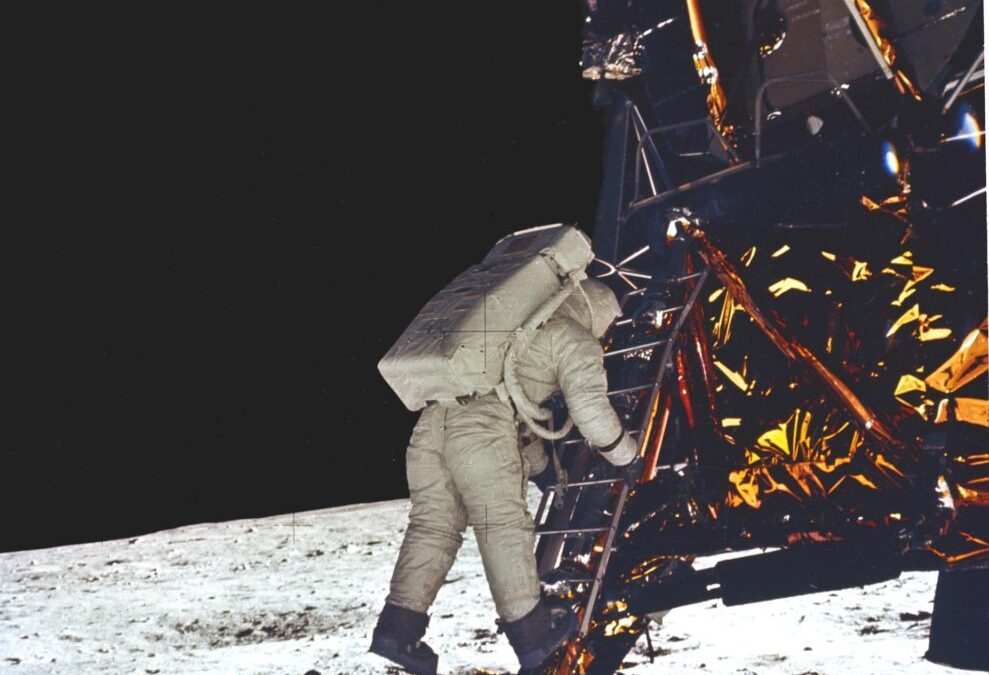
The primary objective of Apollo 11 was to complete a national goal set by President John F. Kennedy on May 25, 1961: perform a crewed lunar landing and return to Earth. Apollo 11 launched July 16, 1969 and landed back on Earth on July 24, 1969. In this photograph, astronaut Edwin (Buzz) Aldrin takes his first step onto the surface of the Moon. Credit: NASA.
There have been huge advances since then in space technology. We depend on it every day for satnav, communications and so forth. And it’s led to wonderful scientific discoveries. But only now, 50+ years after Apollo, are there plans for a return to the moon. The US is spending 90-billion dollars on the Artemis program – which is touted as a precursor of human voyages to Mars.
But at the risk of being unpopular, I’d like to explain why I don’t think taxpayers should fund any such venture.
Unlike in the Apollo era, we now have robotic explorers, exemplified by the suite of rovers on Mars, where Perseverance, and its Chinese counterpart, can drive through rocky terrain with only limited guidance from Earth. Within 10 or 20 years, AI advances will close the gap between robotic and human capabilities, rendering human flights to Mars even poorer practical or scientific value.
Moreover, flotillas of robotic craft could explore the planets and moons of the outer solar system with little additional expense. Multi-year journeys present little more challenge to a robot than the six-month voyage to Mars.
The Mars 2020 Perseverance Rover searches for signs of ancient microbial life, to advance NASA’s quest to explore the past habitability of Mars. The rover is collecting core samples of Martian rock and soil (broken rock and soil), for potential pickup by a future mission that would bring them to Earth for detailed study. Credit: NASA/JPL-Caltech/ASU/MSSS.
The next step will be the deployment in space of robotic fabricators, which can build large structures – for instance, giant successors to the James Web Space Telescope, with huge gossamer-thin mirrors assembled under zero gravity. These will further enhance our imaging of exoplanets and the wider cosmos.
The practical case for human spaceflight gets ever weaker with each advance in robots and miniaturization. Astronauts need far more ‘maintenance’ than robots, simply because their activities require air, water, food, living space, and protection against harmful radiation.
Moreover, safety and reliability standards must be more stringent, and therefore more expensive, when human lives are at stake. Already substantial for a trip to the moon, the cost ratios between human and robotic journeys grow much larger for any long-term mission.
Astronaut Serena Auñón-Chancellor harvests red Russian kale and dragoon lettuce from Veggie on Nov. 28, 2018, just in time for Thanksgiving. The Vegetable Production System, known as Veggie, is a space garden residing on the International Space Station. Veggie’s purpose is to help NASA study plant growth in microgravity, while adding fresh food to the astronauts’ diet and enhancing happiness and well-being on the orbiting laboratory. Credit: ESA/Alexander Gerst.
A Martian mission, taking six months to get there, and including provisions, and rocketry for a return trip, could cost NASA a trillion dollars. The cost would rise so high because NASA has developed a ‘safety culture’ – a response to the national trauma that followed the Space Shuttle disasters in 1985 and 2003, which each sadly killed the seven civilians on board.
The Shuttle had 135 launches altogether, and represented a failure rate below two percent. But it had, unwisely, been promoted as a safe vehicle for civilians. So, each failure was followed by a hiatus while costly efforts were made (with very limited effect) to reduce the risk still further. It would be utterly unrealistic to expect a 98 percent probability of a safe return from Mars.
But thrill-seekers and adventurers would willingly accept higher risks. Cut-price trips to Mars, bankrolled by billionaires and private sponsors, could be crewed by willing volunteers. The public wouldn’t be paying and would cheer on these brave adventurers.
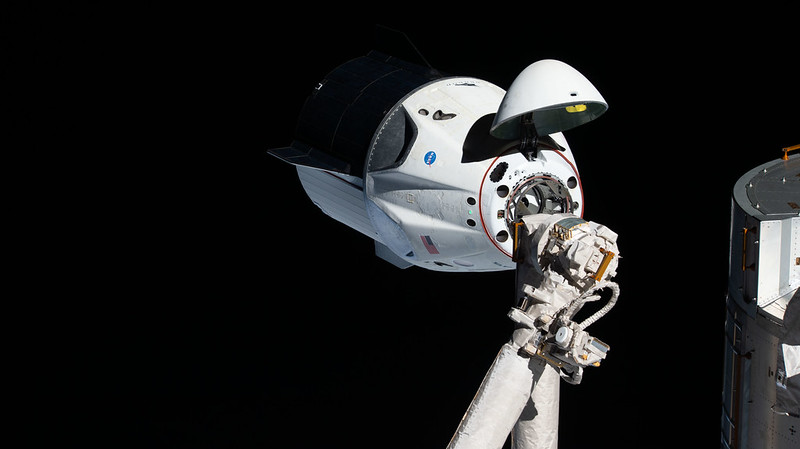
The uncrewed SpaceX Crew Dragon spacecraft is the first Commercial Crew vehicle to visit the International Space Station. Here it is pictured with its nose cone open revealing its docking mechanism while approaching the station’s Harmony module. Credit: NASA EHDC S/N 1004 103.1F
As an American or European I’d argue that inspirationally led private companies should ‘front’ all human missions beyond low-earth-orbit as cut-price high-risk ventures. There would still be many volunteers: some perhaps even accepting ‘one-way tickets’, driven by the same motives as early explorers, mountaineers, and the like.
That is why the phrase ‘space tourism’ should be avoided. It lulls people into believing that such ventures are routine and low risk. And if that’s the perception, the inevitable accidents will be as traumatic as those of the Space Shuttle were. These exploits must be ‘sold’ as dangerous sports, or intrepid exploration.
By 2100 thrill-seekers and adventurers may have established a base on Mars – under a dome or in a cave… Elon Musk says he wants to die on Mars – but not on impact. He’s 52 now, so it’s a realistic goal.
But don’t ever expect mass emigration from Earth. And here I disagree strongly with Musk, Zubrin and others who advocate a rapid build-up of large-scale Martian communities. It’s a dangerous delusion to think that space offers an escape from Earth’s problems. We’ve got to solve these here. Coping with climate change may seem daunting, but it’s a doddle compared to terraforming Mars.
Nowhere in our Solar system offers an environment even as clement as the Antarctic, the ocean bed, or the top of Everest. There’s no ‘Planet B’ for ordinary risk-averse people.
Antarctica is Earth’s fifth largest continent. Image credit: NASA
But we humans should cheer on the risk-taking space adventurers, because they will have a pivotal role in spearheading humanities in the 22nd century and far beyond.
This is why.
The pioneer Martian explorers will be ill-adapted to their new habitat, so they will have a compelling incentive to re-design themselves – exploiting the super-powerful genetic and cyborg technologies that will be developed in coming decades.
These techniques will, one hopes, be heavily regulated on Earth, on prudential and ethical grounds; but ‘settlers’ on Mars will be far beyond the clutches of the regulators. We should surely wish them good luck in modifying their progeny to adapt to hostile unearthly environments. This would lead towards divergence into a new species.
So, it’s these spacefaring adventurers, not those of us comfortably adapted to life on Earth, who will spearhead the post-human era. Their population will evolve not via Darwinian selection but by the much faster process I’d call ‘secular intelligent design’.
Artist’s concept of Mars mission. Credit: NASA
What will they be like?
There are chemical and metabolic limits to the size and processing power of flesh and blood brains. Maybe we’re close to these already. But no such limits constrain electronic computers.
We are perhaps near the end of Darwinian evolution, but the technological evolution of intelligent beings is only just beginning. It will happen fastest away from the Earth – I wouldn’t expect (and certainly wouldn’t wish for) such rapid changes in humanity here on the Earth though our survival will depend on ensuring that AI remains ‘benevolent’.
We humans thrive on a planetary surface; but if posthumans make the transition to fully inorganic intelligences, then they won’t need an atmosphere. And they may prefer zero-g, especially for constructing massive artefacts. So, it’s in deep space – not on Earth, nor even on Mars – that non-biological ‘brains’ may develop powers that humans can’t even imagine.
The text of this blog post was based on a speech given by Lord Rees at the Starmus VII Conference, Bratislava, May 2024.