

Understanding the Enigmatic Nature of Black Hole Singularities
Black holes have long been a source of fascination and mystery for scientists and the general public alike. These enigmatic cosmic entities are known for their immense gravitational pull, which is so strong that not even light can escape from them. At the heart of every black hole lies a singularity, a point of infinite density and zero volume where the laws of physics as we know them break down.
The concept of a singularity was first proposed by physicist Albert Einstein in his theory of general relativity. According to this theory, when a massive star collapses under its own gravity at the end of its life cycle, it forms a black hole with a singularity at its center. The gravitational pull of the singularity is so strong that it warps space and time around it, creating a region of spacetime from which nothing can escape, not even light.
The enigmatic nature of black hole singularities lies in the fact that our current understanding of physics breaks down at these points of infinite density. According to general relativity, the laws of physics become undefined at the singularity, leading to what is known as a “singularity problem.” This problem has puzzled scientists for decades, as it raises questions about the fundamental nature of the universe and the limitations of our current understanding of physics.
One possible explanation for the enigmatic nature of black hole singularities is the need for a theory of quantum gravity. Quantum gravity is a theoretical framework that seeks to reconcile the principles of quantum mechanics with those of general relativity, in order to provide a more complete understanding of the universe at the smallest and largest scales. By incorporating quantum effects into the theory of gravity, scientists hope to resolve the singularity problem and gain a better understanding of the nature of black holes.
Another possible explanation for the enigmatic nature of black hole singularities is the existence of multiple universes or dimensions. Some theories suggest that black holes may be portals to other universes or dimensions, where the laws of physics are different from our own. In this scenario, the singularity at the center of a black hole may be a gateway to another realm of existence, beyond the reach of our current understanding.
Despite the enigmatic nature of black hole singularities, scientists continue to study these cosmic phenomena in order to unravel the mysteries of the universe. By observing the behavior of black holes and their surrounding environments, researchers hope to gain insights into the nature of spacetime, gravity, and the fundamental laws of physics. With ongoing advancements in technology and theoretical physics, we may one day unlock the secrets of black hole singularities and gain a deeper understanding of the enigmatic nature of the universe.

Embarking on Project TikTok
When I joined the Science and Media Museum team this summer as a Marketing and Comms Intern, I wasn’t quite sure what my main project would be. So, when I was told that I’d be working on a TikTok project for the museum, I was super excited. Short-form content is something I genuinely love creating and the chance to bring that to the museum is the perfect match.

You might be wondering to yourself, why TikTok? Or better yet, what is TikTok? TikTok has become more than just a place for trends and entertainment. It’s now a space for learning, storytelling and cultural connection. From #museumtok to #learnontiktok, museums and galleries have started using the platform to highlight their spaces and collections in creative and authentic ways.
Over the past few weeks, I’ve been researching how other museums and cultural institutions have been using TikTok, identifying trends and brainstorming ways that we can bring our own unique voice to the app. I’ve got ideas to develop a series of content pillars, from ‘day in the life’-style videos to educational moments and sneak peeks behind the scenes.
One thing that’s stood out to me is how much potential there is to feature real people—staff, volunteers, even visitors. TikTok works best when it feels very human and I love how museums have been able to reflect the energy of their spaces through the people who power them. An example of this is the Royal Armouries, who went viral after Senior Curator Mark Murray-Flutter began delivering history tours in full Gen-Z slang, calling Henry VIII “the original rizzler” and praising dioramas as “lit”. The playful content not only earned them a spot on TikTok’s “best of 2024” list, but also boosted visitor numbers by over 60% above pre-pandemic levels, proving how humour and authenticity can turn online engagement into real-world footfall.
So what’s next? Over the next coming weeks, I’ll be testing content, gathering feedback and pulling everything together. My work may become a TikTok Toolkit full of information and tips that will be useful for the museum beyond my internship.
Being assigned this project has been such a rewarding experience. It’s pushed me creatively and has also given me the chance to work on something that really aligns with my strengths. Hopefully, you’ll see the Science and Media Museum on your For You page very soon!
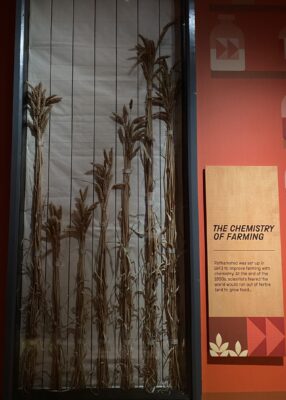
The Future of Wheat: How Science Could Reinvent a Top Protein Source
Though seemingly unremarkable, wheat is the culmination of a fascinating genetic story—and heralds a scientific revolution that could reshape how we farm and how we tackle chronic disease.
Wheat has never truly been a wild plant. ’Bread wheat co-evolved with humans’ says Simon Griffiths, group leader at the John Innes Centre near Norwich. ’It was a domesticated species from the start.’

Various lines of evidence suggest wheat’s origins trace back around 10,000 years to the Fertile Crescent, a region spanning modern-day Iraq, Syria, Turkey, and Iran, which flourished around what many believe is the world’s first city, Çatalhöyük in southern Anatolia.
Granaries uncovered there suggest that early urban life was built on domesticated grain—a spur to civilisation.
Early Neolithic farmers domesticated wild grasses including einkorn, Triticum urartu and two goatgrasses, Aegilops tauschii and Aegilops speltoides.
They all share a common ancestor but, through centuries of cultivation, gave rise to the bread wheat we know today. Its stretchy gluten helps bread rise and become soft and airy.
That domestication has led to a genetic structure unlike almost any other crop, where the wheat genome is five to six times larger than our own, with about 17 billion ‘letters’ (base pairs) compared to the human genome’s measly three billion.
Wheat is an allopolyploid, meaning it contains multiple sets of chromosomes from ancestral grasses. As a result, there are six sets of chromosomes in bread wheat (pasta wheat evolved differently to have four sets, by comparison, so is simpler).
’Those genomes are still there in the wheat genome—separate, kept apart,’ Griffiths explains. ’Most polyploids eventually become a genetic mush. But wheat has preserved its ancestral genomes.’
’Way back,’ adds Griffiths, ’there was a Japanese scientist called Susumu Ohno in the 1970s who wrote what was considered a wacky theory then—that we’re all polyploids.’
‘Now we know that even mammals are cryptic polyploids,’ Griffiths notes. ‘Our genomes came together from different ancestors too—but over time, the traces blurred. Wheat is unusual in keeping them separate.’
The John Innes Centre has played a key role in understanding wheat’s origins. ‘Our then director Graham Moore cloned the gene in a relative of A. speltoides found in pasta and bread wheat that ensures wheat’s ancestral genomes remain distinct,’ Griffiths notes. ‘It’s a rare case where evolution didn’t blur the lines—it preserved them.’
This genetic complexity – with three versions of every gene – gives wheat extraordinary adaptability. It also provides a rich toolkit for scientists seeking to improve the crop—not just for yield, but for nutrition.
From the Green Revolution to the Genomic Age
The first leap in wheat breeding came in early 20th-century Europe, when scientists used traditional ‘Mendelian’ genetics to select for traits such as disease resistance and baking quality.
Perhaps the greatest leap in wheat productivity came during the Green Revolution of the mid-20th century. Through conventional breeding, agronomists developed high-yielding, disease-resistant varieties that dramatically increased food production.
A key advance came from the introduction of Japanese dwarf wheat varieties, which enabled plants to support heavier grain heads without collapsing under their own weight, or lodging. Wheat yields soared, and famine was averted in parts of Asia and Latin America.
But the Green Revolution focused on calories, not nutrients. And it relied heavily on synthetic chemicals—fertilisers and pesticides – along with irrigation, all of which are now under scrutiny for their environmental impact. Moreover, decades of breeding has reduced wheat diversity to only 40 per cent of historic levels.
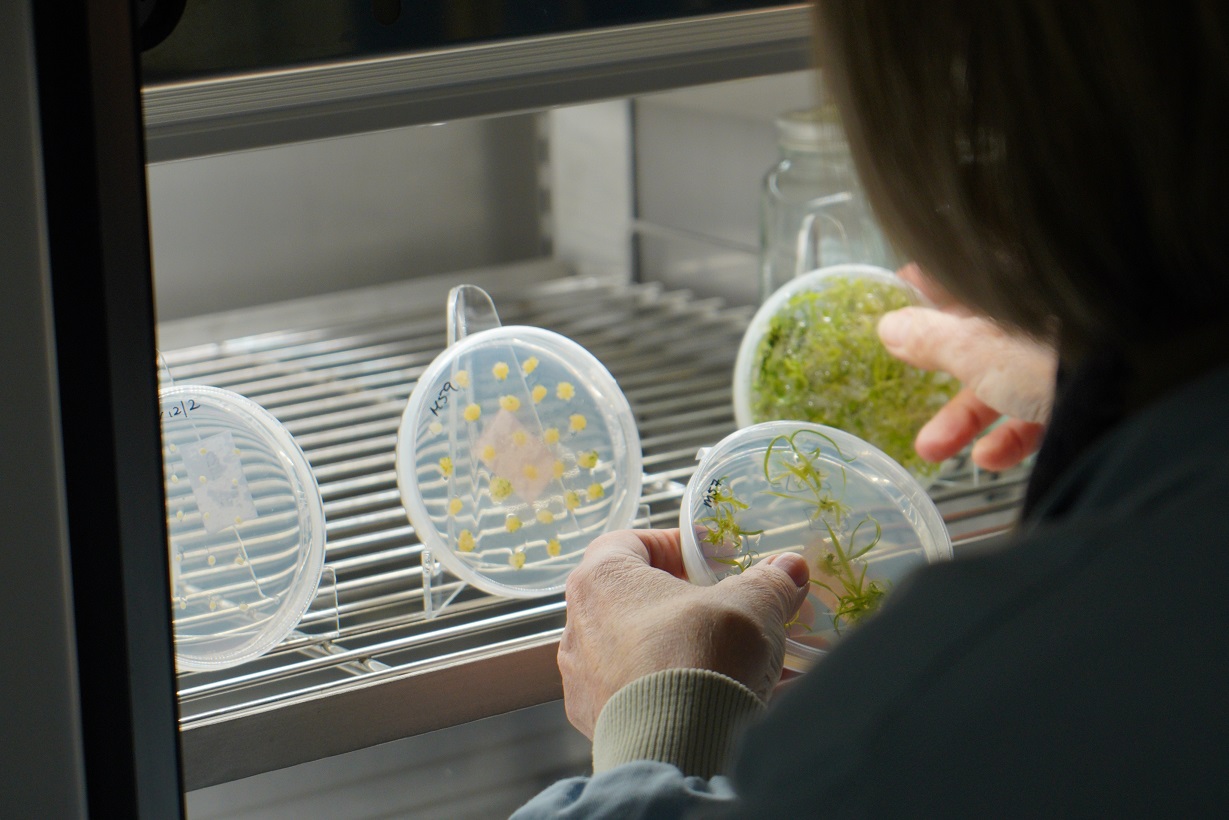
Engineering wheat
Today, a new revolution is underway—one driven not by the field, but by the lab. Scientists are using genetic tools to make precise changes to wheat DNA, accelerating the breeding process and targeting traits that were previously thought out of reach.
‘We’ve got the genetic toolbox to do that,’ says Griffiths. ‘We can now identify and manipulate the genes responsible for nutritional traits—like fibre content, mineral uptake, and even gluten structure.’
These changes are made using a combination of marker-assisted selection (a technique that uses genetic markers to guide breeding decisions), genome sequencing (decoding the entire DNA of an organism), and in some cases, gene editing—notably using tools like CRISPR (a precise method for altering DNA).
Unlike traditional breeding, which can take decades to achieve a desired trait, these methods allow researchers to pinpoint and propagate beneficial genes with unprecedented speed and accuracy. Moreover, there are collections of local cultivars of wheat, such as one put together by Arthur Watkins in the early 20th century, now kept in the John Innes Centre’s Germplasm Resource Unit, which can help scientists glimpse the lost 60 per cent of wheat diversity, and varieties tolerant of many modern wheat blights.
Griffiths and his colleagues have, for example, take an ancestral wheat (the Watkins landraces) and introduced the Reduced Height genes, known as Rht-B1b and Rht-D1b, that helped give rise to the Green Revolution.
Fighting Diabetes with White Bread
As the global population heads toward 10 billion, wheat will remain a dietary cornerstone. Studies suggest that climate change will lead to fewer calories overall to feed the planet and one objective will be to find higher yield varieties that can thrive in a warming world, or shrug off fungal diseases such as yellow rust.
But Griffiths sees nutrition—not yield—as the next frontier. ‘There’s no turning back the tide on global population growth,’ Griffiths says. ‘Wheat, rice, and maize will remain staples—we must keep production high while improving quality.’
‘For me, the big tidal wave coming is nutritional traits,’ he says. ‘Most people around the world, and many in Western Europe too, can’t afford a healthy diet. But wheat is already in their diet. If we can pack more nutrition into it, we can make a real difference.’
The focus is on the white endosperm—the starchy part of the grain used to make white flour. Traditionally, this has been stripped of fibre and micronutrients during breeding. But new breeding techniques allow scientists to reintroduce beneficial compounds like arabinoxylan and beta-glucan, both forms of dietary fibre known to improve gut health and regulate blood sugar.
‘We can breed wheat that delivers 30 grams of fibre a day—the recommended amount—without changing the taste or texture of bread,’ Griffiths explains, referring to work that he has done with Alison Lovegrove and Peter Shewry at Rothamsted Research in Harpenden.
The implications are profound. Type 2 diabetes is a global epidemic, driven in part by diets high in refined carbohydrates and low in fibre. Griffiths believes wheat could be part of the solution.
‘We’ve got this amazing result,’ he says. ‘We can give you bread that tastes like your standard white loaf, but it delivers the fibre you need. People wouldn’t even notice the difference.’
High Fibre Market Failure
Despite the scientific advances, high-fibre wheat varieties are not yet available to buy. ‘The reason it doesn’t get to people is because of market failure,’ Griffiths says. ‘The food system is driven by consumer demand. If millers, bakers, and retailers don’t see a market for nutritious wheat, they won’t invest in it.’
Griffiths believes the solution lies in public engagement. ’It’s within your grasp as a citizen. You’ve got to tell governments and breeders: we want it. Tell millers, tell bakers—the whole value chain. That’s the only way it’ll come.’
There’s also a cultural hurdle. Many consumers are drawn to heritage grains, notably from landraces where seeds are passed down the generations, and traditional farming methods. ‘If you said, “Here’s a scientifically designed nutritious wheat,” versus “Here’s a landrace from Hertfordshire 200 years ago,” people would probably go for the latter,’ Griffiths admits. ‘It’s often the upper middle classes—the “worried well”—who romanticise heritage grains,’ Griffiths observes. ‘But we’re facing a diabetes crisis, and we have a scientifically sound solution.’
The UK Wheat Programme
The John Innes Centre, based in Norwich, is one of the world’s leading institutes for plant and microbial research. Founded over a century ago, its scientists have helped decode the wheat genome, develop disease-resistant crops, and pioneer nutritional enhancements that could transform the global food supply.
Griffiths is not just a researcher—he’s a coordinator of one of the UK’s most ambitious agricultural science initiatives. ‘I lead the UK Wheat Programme,’ he says. ‘It’s cross-institutional—four research institutes, six universities.’
The programme’s goal is to develop wheat varieties that are not only high-yielding and climate-resilient, but also nutritionally enhanced. Although there is anxiety about using genetic methods, he emphasises how scientists can now sequence the genetic code of any new variety in unprecedented detail to confirm it is the same as a change linked with, say disease resistance, in nature.
Griffiths is optimistic. ‘There’s such a great opportunity,’ he says. ‘More nutritious wheat. It’s right there. We just have to want it.’
The Science Museum’s Future of Food exhibition offers a timely reminder that the food system is not fixed—it’s evolving in the face of a soaring global population and the pressures of climate change. Wheat, as the world’s most important grain, is at the heart of that transformation and also features in the exhibition, from 1000 BCE grains to a sample of 1500 BCE bread and heat tolerant varieties.
‘Visitors can follow the incredible journey of wheat, from ancient grains showing early domestication to the high yielding varieties developed by Nobel laureate Norman Borlaug’, commented curator Rupert Cole. ‘Looking to the future, highlights include pasta made from a perennial version of wheat and a dazzling sculpture of wheat stomata, illustrating the genetic possibilities of climate adaption.’
The post The Future of Wheat: How Science Could Reinvent a Top Protein Source appeared first on Science Museum Blog.
Vijaye Raji to become CTO of Applications with acquisition of Statsig
Vijaye Raji will step into a new role as CTO of Applications, reporting to CEO of Applications, Fidji Simo, following the acquisition of Statsig.