Farmer Giles’s establishment – Christmas Day – 1800. A festive nineteenth century Christmas Day with mistletoe, ham, and Christmas pudding. The large family looks jolly as they sit around the table enjoying a feast.
Christmas carries the weight of centuries of traditions: short days are capped with cold and cozy evenings spent with family and friends. However, as our complex and interconnected food practices impact the planet, there are scientists, food producers, and communities around the world who are exploring innovative solutions to create more sustainable ways of producing and consuming food.
Looking towards the future, what might be on our plates for Christmases to come?
CELL-GROWN TURKEY
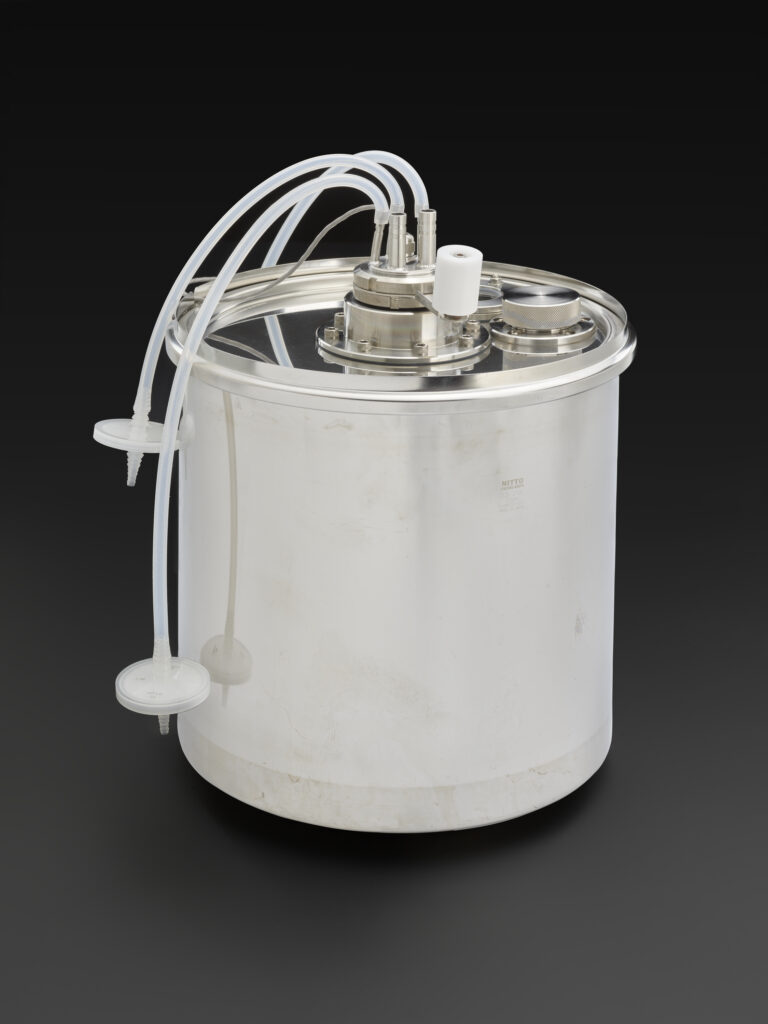
A repurposed pressure cooker bioreactor for making cell-grown meat at home. Holes have been drilled into the inexpensive pressure cooker, so nutrient fluid can be added to feed the cells, encouraging their duplication until the meat reaches the desired size. The Shojinmeat Project specifically designed this to be financially accessible and made from objects already found in the home.
Our air fryers might need to move over on the kitchen worktop to grow our own Christmas Turkeys. Cell-grown meat technologies are still in development for a mass scale but maybe soon we will all be able to choose some meat cells, place it in an old pressure cooker-turned-bioreactor, and voilà: a piece of turkey meat ready to be brined and air fried.
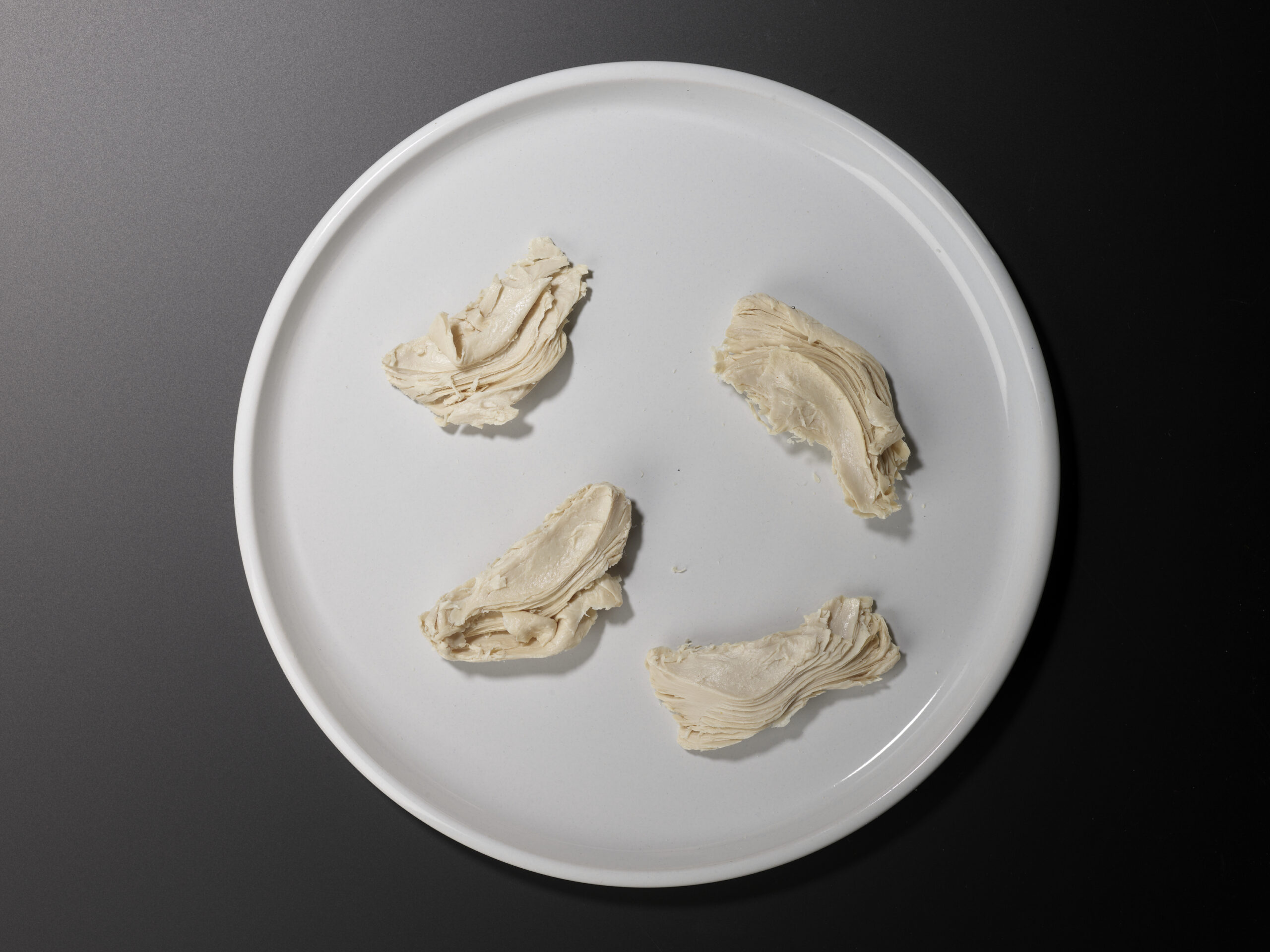
Similarities to industrially farmed chicken meat and lab-grown can be seen in this plasticised Eat Just cultured chicken sample. What is not visible, is the saved environmental and welfare costs compared to industrially farmed meat.
It might sound like science fiction, but a piece of beef steak, chicken breast, saku salmon, and pork sausage (great for pigs in a blanket!) are all on display in the Future of Food exhibition.
Protein rich substitutes for meat like insect-based foods, legumes like locally grown lentils, and meat substitutes like Quorn will likely continue to rise in popularity and may become Christmas staples too.
BLIGHT-RESISTANT POTATOES
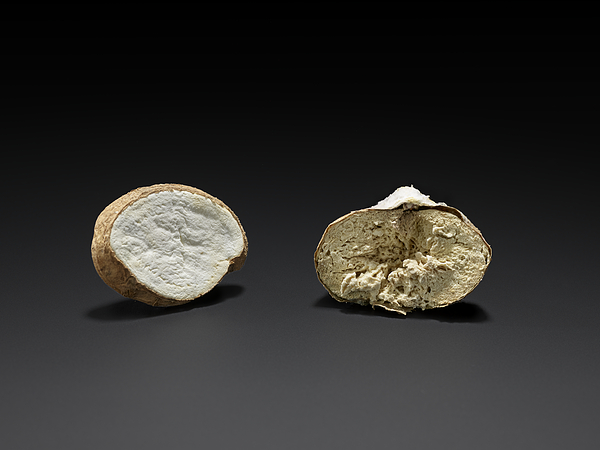
Freeze dried slices of both disease resistant genetically modified (GM) potato [left] and non-GM potato [right] after having been infected with late blight made by Sainsbury Laboratory, Norwich, UK, 2025.
Making environmental food choices as individuals is complex and not everyone has access to the same choices, but it is also a necessary step to shaping a new food system for our plates and the planet. Genetically modified crops are now allowed to be imported to and commercially developed in England, contributing to the precision agricultural movement.
Scientists at the Sainsbury Laboratory in Norwich recently identified a gene from a nightshade plant that when genetically inserted into potatoes prevents the need for fungicides from being applied to crops, removing these intense chemicals which can be harmful to the biodiversity of the local area and to human health.
PALM OIL FREE MARGARINE
In the future, Christmas potatoes could be roasted in palm oil-free margarine.
A view of a worker weighing margarine in a Unilever factory in 1950 (model scale 1:12). The model follows the manufacturing process from refining the oils to workers wrapping the solid blocks in paper. Margarine, made from blending and hardening vegetable oils, overtook butter as the most popular fat in Western diets in the 20th century.
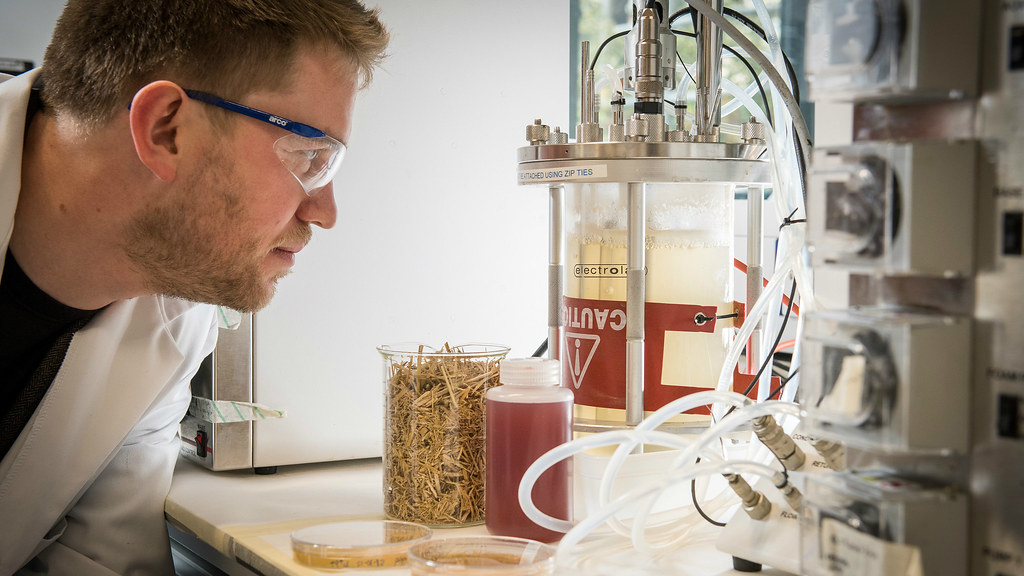
Palm oil production accounts for 8% of global deforestation, making it one of the most destructive crops for the environment. Scientist Chris Chuck (pictured below) from the Clean Food Group, has identified a type of yeast that decreases greenhouse gas emissions by 95% and has the same chemical make-up as palm oil. The process of precision fermentation creates this sustainable alternative, and it does not require any new crops to be grown as the yeast can be fed with coffee grounds, surplus breadcrumbs, and grass.
Scientist Chris Chuck provides grass feedstock for the yeast growing in the Clean Food Group’s bioreactor. This yeast will be used to create a palm oil substitute. Come see this working object in the exhibition.
LAVER
The future could bring back traditional recipes like laverbread from Wales that’s been enjoyed since the 12th century. Laver or lawr, is made of seaweed that has been washed clean from the sand, sweated between two tile stones, shredded until small, and well-kneaded. It is eaten raw (often on toast), fried with oatmeal and butter into a lavercake, or mixed into a recipe like dough for laverdough bread or a Christmas Eve classic like fish pie.
Laver is extremely ecofriendly, supports the health of the local coastline, and is rich in vitamins and minerals, so it could likely grow in popularity as a Christmas staple in the future.
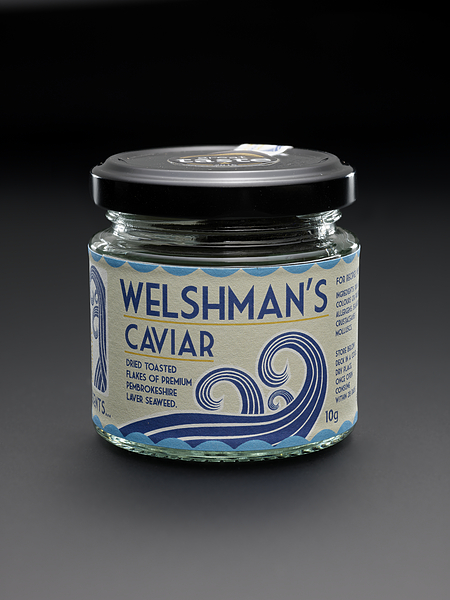
A jar of Welshman’s caviar, dried toasted flakes of seaweed grown in the southwest county of Wales called Pembrokeshire. It can be used to season a variety of dishes like eggs, salmon, and rice.
Oceans are the biggest carbon sink on Earth. However, the rising carbon levels in the ocean have increased its acidity, ultimately harming the whole ecosystem. Multispecies seaweed farms offer a solution: shellfish and seaweed cultivated together create cleaner water and are both excellent candidates for Christmas dinner.
LOCALLY GROWN FRUITS & VEGETABLES
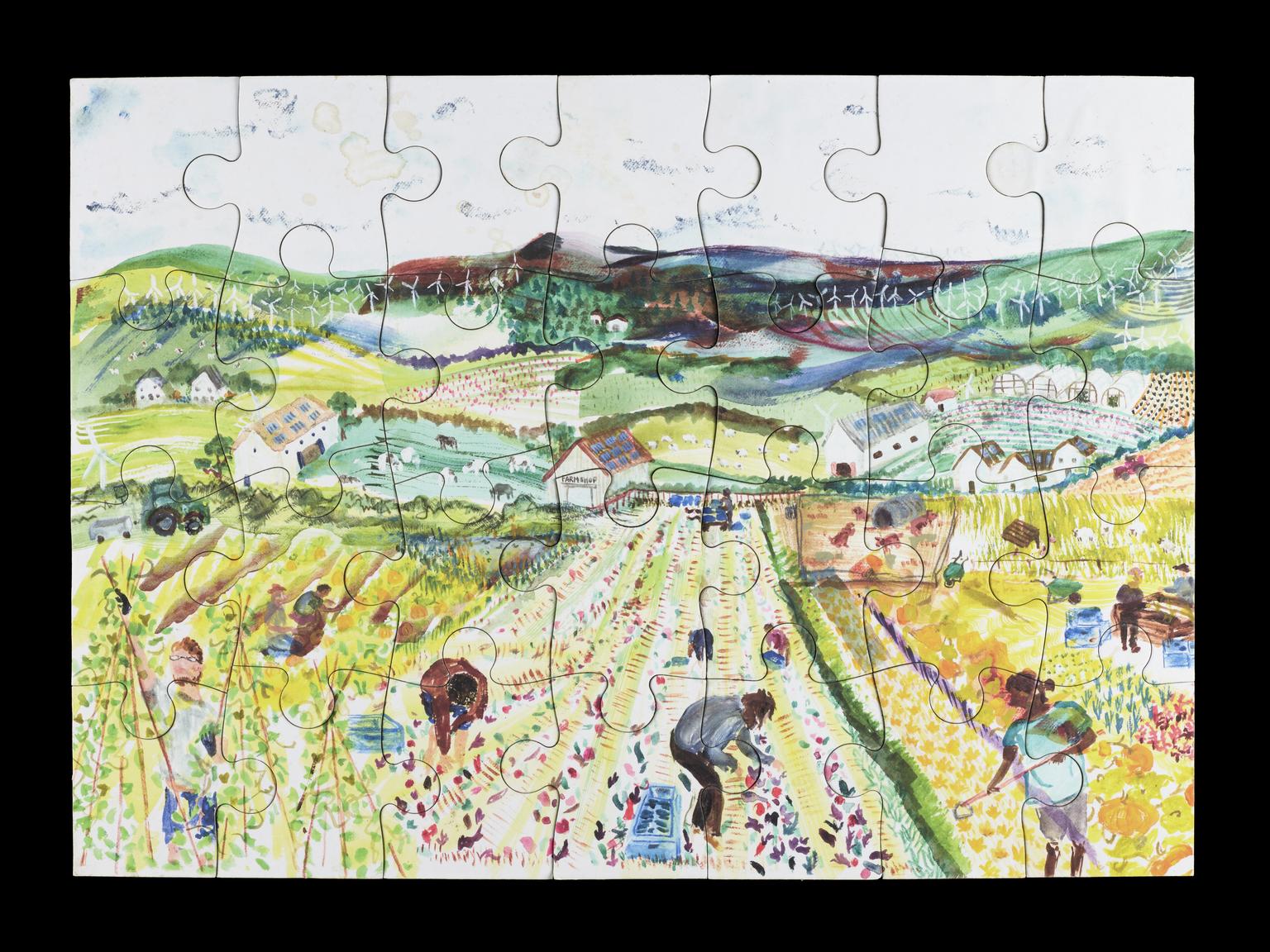
This jigsaw puzzle was created by a group of farmers in the UK, Kenya, Indonesia and Mexico. They came together in 2021 to imagine a vision based on agroecology where a diverse group of people work together in a mixed landscape of crops, livestock, trees and wildlife habitats. Their envisioned future community is sustainably powered with a shop selling their locally produced food.
As the warming climate continues to affect the agricultural sector, meals may become more reliant on innovative recipes that respond to changes in local in-season fruits and vegetables. Currently in the winter months potatoes, beetroot, brussels sprouts, carrots, squash, parsnips, leeks, chestnuts, cranberries, apples and pears are all in season in the UK. In the future, there might be other items on our plates.
The growing season has already been extended by 15 days in the past 50 years, which might sound useful, but lengthening the growing season could be detrimental to the health of the soil, plants, and animals consuming them.
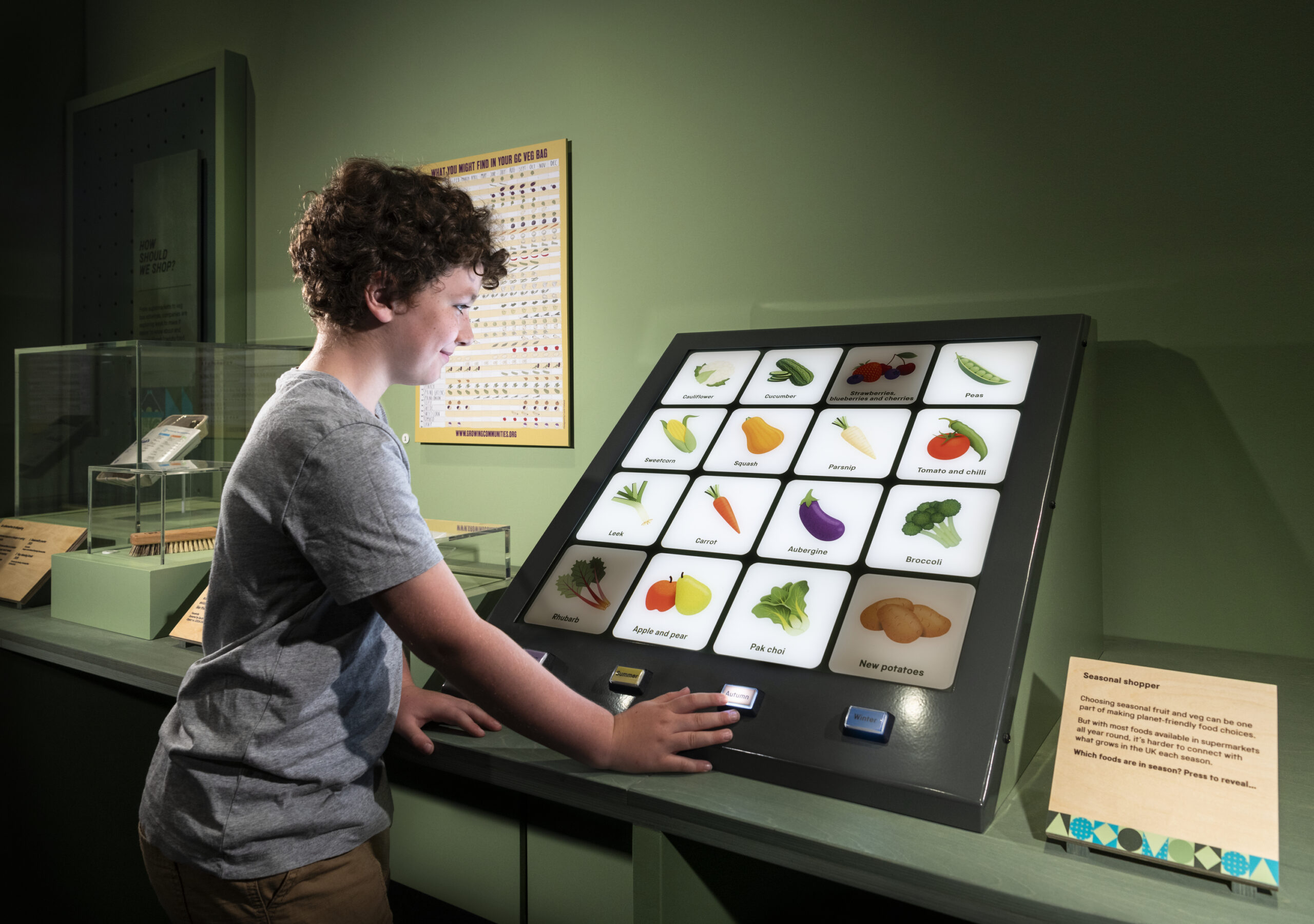
Visitor at the Future of Food exhibition looking at an interactive that shows which crops are in season. The visitor has currently selected autumn and sees many fruits and vegetables are available.
Various tools online can find local vendors for in-season fruit and veg. You can also join a community vegetable box scheme like and plan your Christmas dinner around that week’s delivery.
COMMUNITY COOKING
Community might play an even greater role in the future for Christmas dinners. Community cooking empowers people with the capacity and resources to share knowledge, skills, cost, and time. As a result, it could become easier and more accessible for everyone to cook with whole foods that have high nutritional densities and support local farmers. It may also help incorporate tradition and culture-based recipes, to mitigate food waste, and to adapt to continuous climate-based changes.
Community kitchens bring people together. This giant cooking pot and stirrer, Made in Hackney apron, and large kitchen paddle from Peru all demonstrate the kitchen facilities used to feed up to hundreds of people from scratch.
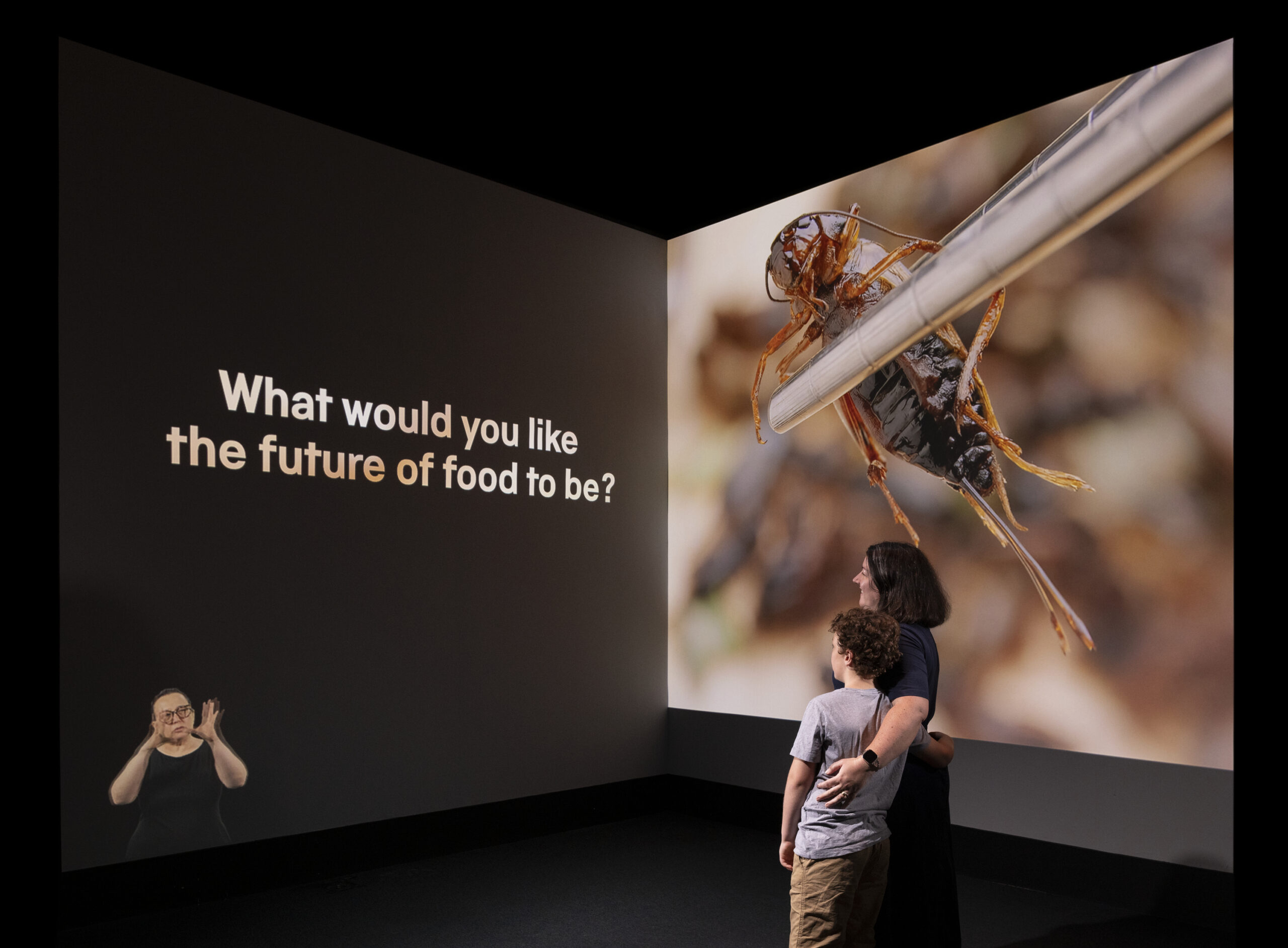
Two visitors look at the question, “What would you like the future of food to be?” in the Science Museum’s Future of Food exhibition.
The future of Christmas dinner is one that works for both us and the planet. Our plates will reflect our changing resources, traditions, and cultures in an increasingly globalised world. So as you sit down to eat your Christmas dinner, imagine what the future might hold for the food on your plate.
View our collection website to explore more objects related to food and book a free ticket to visit the Future of Food exhibition at the Science Museum in London, now extended until 1 September 2026.
More than one million customers around the world now use OpenAI to empower their teams and unlock new opportunities. This post highlights how companies like PayPal, Virgin Atlantic, BBVA, Cisco, Moderna, and Canva are transforming the way work gets done with AI.
OpenAI is strengthening ChatGPT Atlas against prompt injection attacks using automated red teaming trained with reinforcement learning. This proactive discover-and-patch loop helps identify novel exploits early and harden the browser agent’s defenses as AI becomes more agentic.
In our complex and interconnected world, it is becoming increasingly clear that various global issues are not isolated, but rather intricately intertwined. From the ancient empires that thrived on the exploitation of slave labor to the modern-day multinational corporations that perpetuate inequality through unsustainable food production practices, history is rife with examples of how seemingly disparate problems are, in fact, deeply interconnected.
Ancient Roots
Throughout history, the rise and fall of civilizations have been shaped by the exploitation of both natural resources and human labor. The ancient Romans, for example, relied heavily on slave labor to fuel their vast empire, reaping the benefits of cheap production while turning a blind eye to the suffering of those forced into servitude. This legacy of exploitation laid the groundwork for modern-day systems of inequality and injustice that continue to plague societies across the globe.
Food Systems
Slavery
Exploitation
Modern Challenges
In today’s world, the consequences of our interconnectedness are more evident than ever. The global food system, for instance, is a web of complex supply chains that stretch across continents, resulting in environmental degradation, food insecurity, and exploitation of vulnerable populations. At the same time, the legacy of slavery continues to echo through the corridors of power, perpetuating cycles of poverty and oppression that are difficult to break.
As we navigate the maze of interconnected global issues, it is essential that we recognize the inherent links between seemingly unrelated problems and work towards holistic solutions that address the root causes of injustice and inequality.
Only by acknowledging and understanding the intricate web of connections between issues such as food production, slavery, exploitation, and environmental degradation can we begin to untangle the knots that bind us and build a more just and sustainable world for future generations.
A glowing globe, food, slavery, a maze and an explosion.
[This article was first published on Jonas Haslbeck – r, and kindly contributed to R-bloggers]. (You can report issue about the content on this page here)
Want to share your content on R-bloggers? click here if you have a blog, or here if you don’t.
Experience sampling via mobile devices enables unprecedented insights into daily life. However, individual studies often cannot answer research questions conclusively, and open data are scattered across repositories in different formats. This impedes research into robustness, generalizability, and heterogeneity. We address this issue by introducing openESM, an open-source database of openly available experience sampling datasets in a harmonized format. The growing database currently comprises 60 datasets with more than 16,000 participants and more than 740,000 observations. Metadata can be searched via our website (https://openesmdata.org to select and download datasets via packages in R and Python. We demonstrate the potential of openESM through an analysis of within-person correlations of positive and negative affect in 39 datasets, providing evidence for a large negative momentary correlation ($-0.49$, 95% CI: [$-0.54$, $-0.42$]). We end by discussing the design principles that will allow openESM to become a continuously evolving community resource for cumulative experience sampling research. The preprint is available [Here].
To leave a comment for the author, please follow the link and comment on their blog: Jonas Haslbeck – r.
Analyzing the Impact of openESM on Experience Sampling Research
The article discussed the newly introduced open-source software openESM, a platform designed to bridge the gap between disjointed experience sampling data repositories. This tool could bring about a significant revolution in research methods, providing an unprecedented insight into daily life. In this context, we will delve into the long-term implications and potential future developments of openESM for the research community.
Long-Term Implications
With openESM making it easier for researchers to collate and harmonize large datasets from multiple sources, experience sampling studies could become more refined and productive in the long run. This tool also stands to enhance the quality of research output, by allowing researchers to examine the robustness, generalizability, and heterogeneity of their studies more efficiently.
Experience sampling via mobile devices enables unprecedented insights into daily life. However, individual studies often cannot answer research questions conclusively, and open data are scattered across repositories in different formats. This impedes research into robustness, generalizability, and heterogeneity.
Potential Future Developments
Given the scalable architecture of openESM, there is potential for the resource to evolve continually. It is envisaged that an increasing number of researchers will contribute their datasets to the platform, allowing it to grow both in terms of the quantity and the diversity of datasets available. As such, we can expect openESM to become an increasingly valuable resource for cumulative experience sampling research.
Actionable Advice
For those involved in experience sampling research, openESM offers a new, streamlined way to find, download, and analyze relevant data. I recommend learning and becoming comfortable with packages in R and Python to easily select and download datasets from openESM. As the data on the platform grows, consider routinely checking for new datasets that could add depth and nuance to your own research. Furthermore, consider contributing your own datasets to the platform, in order to further enrich the resources available to the research community.
Conclusion
The introduction of openESM is a significant step forward in enhancing the ease and efficiency of experience sampling research. The platform’s potential for growth and evolution assures its relevance for the foreseeable future. Researchers should seize this opportunity to enrich their work and contribute to the growing body of experience sampling data.