

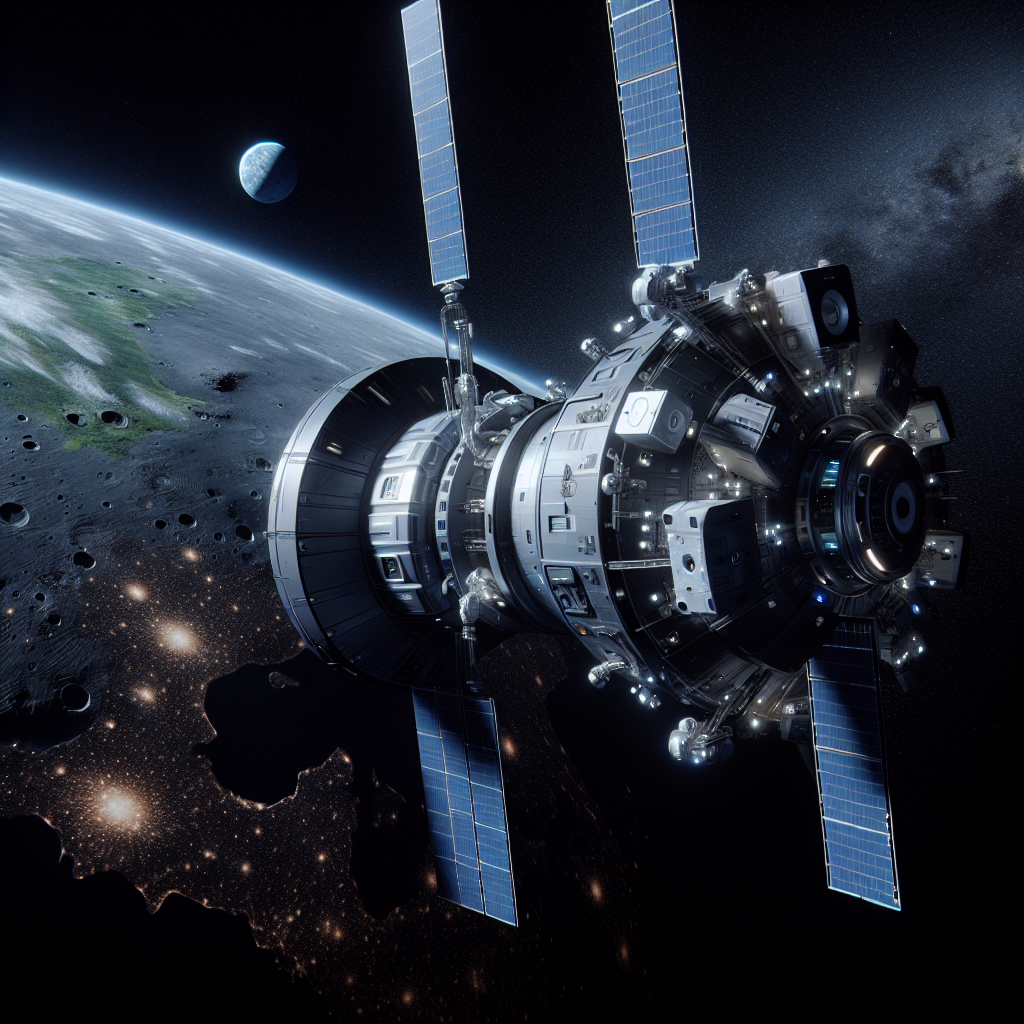
Potential Future Trends in Lunar Space Exploration
With the development of Gateway, humanity’s first lunar space station, the world is entering a new era of lunar exploration. Gateway will not only serve as a base for astronauts to live and work but also as a hub for scientific research and investigations. The potential future trends related to lunar space exploration and Gateway are exciting and offer new opportunities for scientific discoveries and advancements in space travel.
Extended Lifespan of Gateway
Gateway is currently being built with a projected 15-year lifespan, but there is hope that it will continue operating beyond that timeframe. The longevity of Gateway will allow for long-term scientific studies and research in an environment where humans have never lived and worked before. By studying the effects of deep space travel on both astronauts and hardware, scientists can develop better strategies for protecting them during future missions to destinations like Mars.
Integration of Science Payloads Across Artemis Programs
Stephanie Dudley, Gateway’s mission integration and utilization manager, plays a crucial role in coordinating science payloads across all six Artemis programs, including Gateway. This approach ensures that all programs are focusing on utilization in the same way, optimizing the scientific potential of each mission. By integrating science investigations on the Orion spacecraft, Human Landing System, and lunar terrain vehicle, scientists can gather data from various sources and gain a comprehensive understanding of the lunar environment.
Investigations in the Lunar South Pole Region
The lunar South Pole region is of keen interest to the global science community. With Artemis III, the first landing in this region, scientists will have the opportunity to conduct in-depth investigations. The presence of Gateway in lunar orbit will serve as a vital asset for supporting these investigations. The data collected from the lunar South Pole region will provide valuable insights into the Moon’s geological history, potential resources, and suitability for sustained human presence.
Growth of Scientific Discoveries and Advancements
With Gateway becoming operational in the coming years, the scientific community can expect a surge in discoveries and advancements. The unique environment of the Moon, coupled with the research capabilities of Gateway, opens up new avenues for scientific exploration. Researchers can study the lunar surface, conduct experiments in microgravity, and analyze the effects of radiation on human health. These studies will contribute to our understanding of the lunar environment and pave the way for future missions to Mars.
Unique Predictions and Recommendations
Based on the current developments and trends in lunar space exploration, we can make the following predictions and recommendations for the industry:
- The lifespan of Gateway will likely be extended beyond the initial 15 years, allowing for more extensive scientific studies and research.
- Collaboration between space agencies and academia will play a crucial role in maximizing the scientific potential of Gateway and future Artemis missions.
- The demand for advanced radiation shielding technologies and astronaut health monitoring systems will increase as deep space travel becomes more frequent.
- Investments in autonomous robotics and 3D printing technologies will be necessary to support long-duration missions and resource utilization on the Moon.
- The data collected from Gateway and lunar surface missions will contribute to the development of sustainable habitats and infrastructure on the Moon, paving the way for future human colonization efforts.
The future of lunar space exploration is bright, and Gateway will serve as a stepping stone for humanity’s journey to Mars. With its unique scientific capabilities and integration with Artemis programs, Gateway holds the potential to revolutionize our understanding of the Moon and unlock the mysteries of deep space.