Thematic Preface:
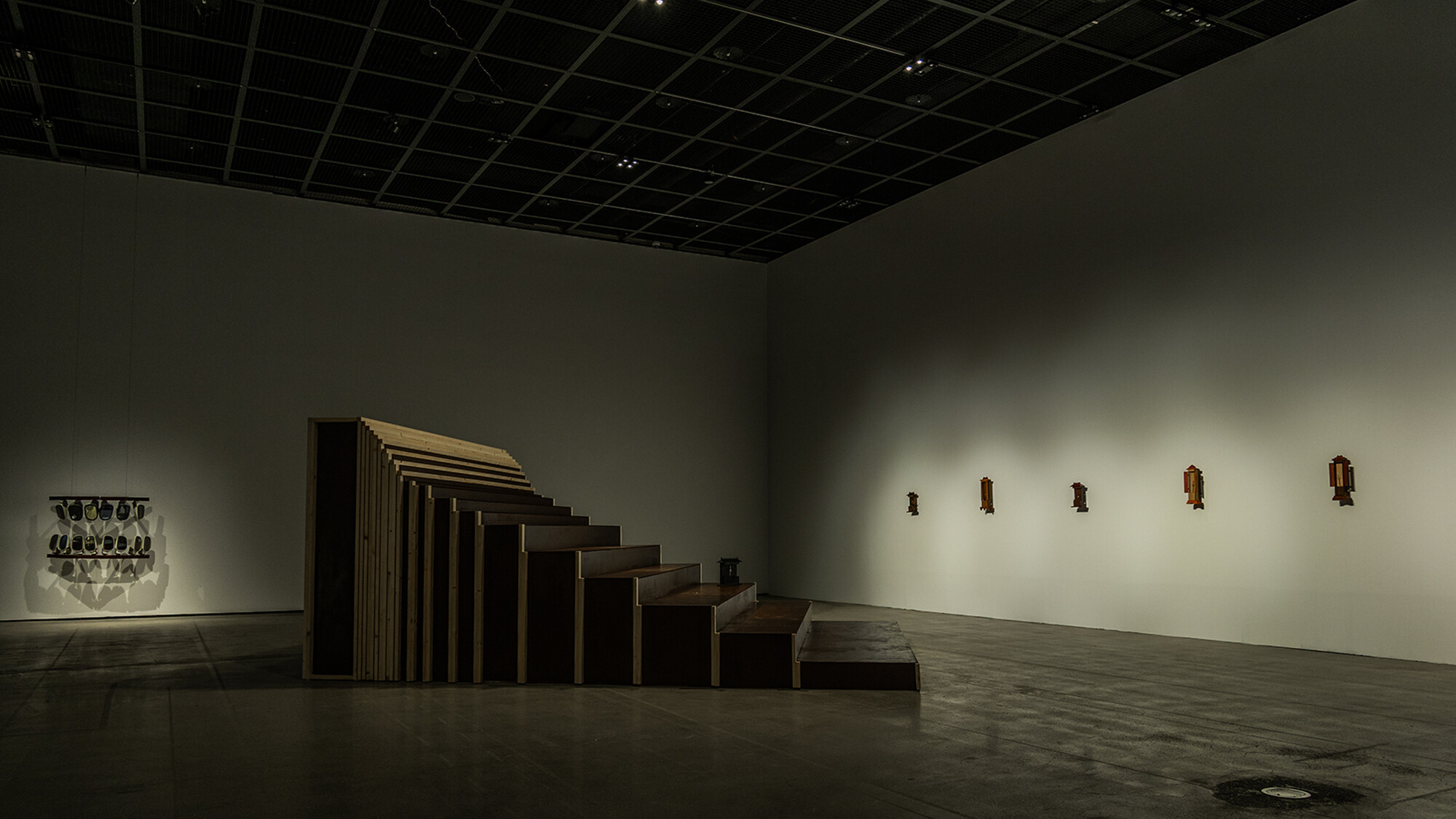
Knocking Where a Door Once Stood interrogates the processes by which boundaries are constituted and dismantled through the operations of memory, employing diverse media and sculptural approaches to critically engage with these dynamics.
Throughout history, the construction and deconstruction of boundaries has played a pivotal role in shaping societies and defining our sense of identity. From the ancient city walls of Jericho to the Berlin Wall that divided a nation, physical barriers have been used to mark territories and control movement. However, these boundaries are not simply physical constructs; they are deeply intertwined with memory and the stories we tell ourselves.
Memory is a fascinating and complex phenomenon, capable of shaping our perception of the world and influencing our behavior. In the digital age, where information is abundant and easily accessible, memory holds an even more significant role. Our collective memory, as a society, can shape the way we understand events, the way we relate to one another, and the way we build and dismantle boundaries.
In this article, we delve into the multifaceted nature of boundaries and memory. We explore how memory can perpetuate divisions and reinforce existing boundaries, but also how it can be harnessed to challenge and break down those barriers. Through diverse media and sculptural approaches, artists and thinkers featured in this article offer critical perspectives and engage with the dynamics of memory and boundary-making.
By examining historical and contemporary references, we aim to shed light on the ways in which memory has been instrumental in the creation and dissolution of boundaries. From the erasure of indigenous cultures to the ongoing struggles for civil rights, we see how memory can serve as a catalyst for social change, a source of empowerment, and a means to redefine our shared spaces.
Ultimately, Knocking Where a Door Once Stood invites readers to critically reflect on the interconnectedness of memory and boundaries. It challenges us to consider how our individual and collective memories shape the world around us, and how we can harness this power to create a more inclusive and equitable society.